
Surgery
Cataract, lens and eyelid surgery with Dr. Walter Liao, from your first scan to your last follow up.
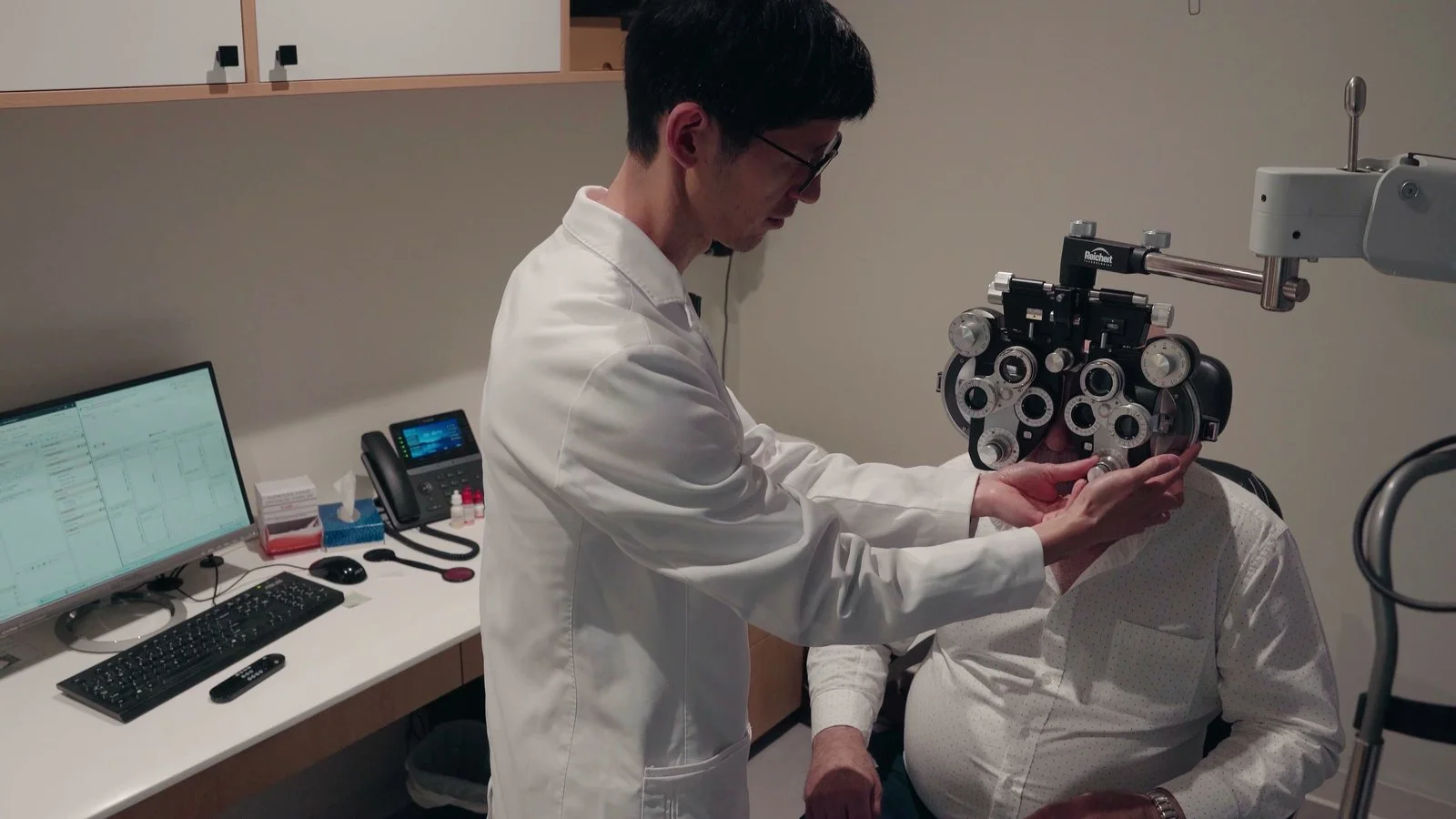

Ophthalmologist
Dr. Walter Liao
Ophthalmologist and eye surgeon, certified by the Royal College of Physicians and Surgeons of Canada, with further training in Asian eyelid surgery in Korea, Taiwan and Japan.
Read profileCataract surgery
Modern cataract surgery designed to restore visual clarity. We guide you through every step, from pre-operative diagnostic mapping to tailored lens selection and post-operative care.
OHIP covered, by referral
Refractive lens exchange
An advanced lens based procedure designed to correct presbyopia or a high prescription, reducing or eliminating reliance on reading glasses and bifocals before cataracts develop.
Private pay
Cosmetic eyelid surgery
Dr. Liao trained in Asian eyelid surgery in Korea, Taiwan and Japan. He does every consultation himself, with no obligation and no pressure, and plans around the natural shape of your eyes.
Private pay, call or text to book a consultation
OHIP covered ophthalmology visits need a referral from your optometrist or family doctor, under OHIP rules.
Eyelid procedures
Small changes around the eyes make a big difference. Times are a general guide, and your plan is made with you at your consultation.
Upper eyelids
The upper lids shape much of how the eyes look, so a small change here can make a big difference. Double eyelid surgery, eyelid lifts and ptosis repair are all upper lid procedures. Beyond looks, droopy or heavy upper lids can make you look sleepy or tired. Most eyelid surgery is done on the upper lids.
Double eyelid, suture methodTime in surgery 40 min · Usual recovery 1 week1 week
Ties the inner muscles to the skin with a non absorbable thread to create a crease, without a large incision. Mild droopiness can be corrected at the same time.
Suitable for
- Thin eyelids
- Little fat around the eyelids
- Those who want a more natural look
- Anesthesia
- Local, with or without IV sedation
- Hospital stay
- None
- Stitch removal
- None
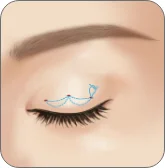
Double eyelid, incisional methodTime in surgery 70 min · Usual recovery 1 month1 month
Attaches the skin to the underlying tissue through an incision to create the crease. Skin, fat and muscle can be adjusted if needed, including turning the lashes outward.
Suitable for
- Thick eyelid skin
- Puffiness around the eyelids
- Excess eyelid skin
- Those who want a big, distinct crease
- Anesthesia
- Local, with or without IV sedation
- Hospital stay
- None
- Stitch removal
- 1 week
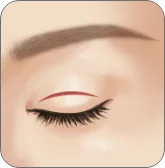
Ptosis repairTime in surgery 40 to 90 min · Usual recovery 1 week to 1 month1 week to 1 month
Raises a droopy upper eyelid, most often caused by a weakened or stretched lifting muscle. Often combined with double eyelid surgery.
Suitable for
- Eyes that look sleepy or tired
- Eyelids covering a third of the pupil
- Those who want larger, more open eyes
- Anesthesia
- Local, with or without IV sedation
- Hospital stay
- None
- Stitch removal
- None or 1 week
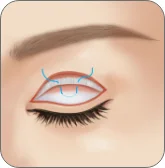
Upper blepharoplasty (eyelid lift)Time in surgery 70 min · Usual recovery 1 month1 month
Removes excess skin that sags over the lashes with age, for a fresher, more rested look. Can be combined with ptosis repair or a brow lift.
Suitable for
- Excess eyelid skin
- Wrinkles around the eyes
- Those who see better when lifting their lids
- Those who want a more youthful look
- Anesthesia
- Local, with or without IV sedation
- Hospital stay
- None
- Stitch removal
- 1 week
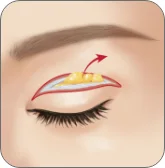
Sub brow liftTime in surgery 40 min · Usual recovery 1 month1 month
Removes excess upper lid skin through an incision just below the eyebrow.
Suitable for
- Eyebrow tattoos
- A wide gap between eyes and eyebrows
- Hooding of the upper lid skin
- Anesthesia
- Local, with or without IV sedation
- Hospital stay
- None
- Stitch removal
- 1 week
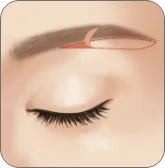
- Ptosis repair raises the edge of the upper lid but does not create a crease. Double eyelid surgery creates the crease but does not raise the lid. Both are often done together.
Lower eyelids
The lower lids play a big part in how the eyes and the whole face look. Eye bags and dark circles sit on the lower lids and can make you look tired or unhappy, even when you are well rested. Love bands, the slight fullness right under the lashes, are the lower lid version of a double eyelid: they give the eyes a smiling look and can make them look larger.
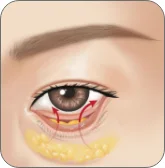
Lower blepharoplasty (eye bags)Time in surgery 90 min · Usual recovery 1 month1 month
Removes or repositions the fat that forms puffy bags under the eyes. Excess skin can also be removed, along with fine wrinkles.
Suitable for
- Dark circles under the eyes
- Bulging lower eyelids
- Sunken tear troughs
- Anesthesia
- Local, with or without IV sedation
- Hospital stay
- None
- Stitch removal
- 1 week
Love bands (aegyo sal)Time in surgery 40 min · Usual recovery 1 month1 month
Adds fullness to the area just under the lower lashes, the lower lid version of a double eyelid. Also softens fine wrinkles.
Suitable for
- Those who want a simple procedure for a younger look
- Fine wrinkles under the eyes
- Those who want their eyes to smile
- Anesthesia
- Local, with or without IV sedation
- Hospital stay
- None
- Stitch removal
- 1 week
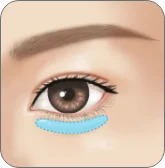
- Love bands sit right under the lower lashes. Eye bags sit lower, towards the cheek. Love bands look youthful; eye bags look tired.
Eyelid corners
The corners change how the whole eye and face look. A prominent fold at the inner corner (the epicanthal fold) can make the eyes look cross eyed when they are not. Outer corners that sit too high can look fierce or unapproachable, and corners that sit too low can look sad. Corner procedures are often done together with other eyelid procedures, and are easy to overlook when planning.
Epicanthoplasty (inner corner)Time in surgery 60 min · Usual recovery 1 month1 month
Releases the fold at the inner corner of the eye, near the nose, so the eye looks longer and more open. Often done with double eyelid surgery.
Suitable for
- Prominent inner corner folds
- A wide gap between the eyes
- Eyes that look cross eyed
- Anesthesia
- Local, with or without IV sedation
- Hospital stay
- None
- Stitch removal
- 1 week
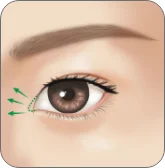
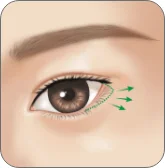
Lateral canthoplasty (outer corner)Time in surgery 60 min · Usual recovery 1 month1 month
Extends the outer corner of the eye outward, changing its shape and angle for a softer look.
Suitable for
- Outer corners that slope upward
- Eyes too close together for an inner corner procedure
- Those who want an almond shape
- Anesthesia
- Local, with or without IV sedation
- Hospital stay
- None
- Stitch removal
- 1 week
All eyelid procedures are done under local anesthesia, with or without IV sedation, and you go home the same day.
How surgery works here
- 01
Referral or consultation
OHIP covered surgery starts with a referral. Cosmetic consultations can be booked directly.
- 02
Diagnostic mapping
We measure your eyes in detail so the plan and the lens fit you.
- 03
Surgery day
Dr. Liao performs your procedure and talks you through each step.
- 04
Follow up care
Follow up visits stay in the same clinic, with the same team.